Język

Zdobądź wycenę
Zdobądź wycenę
 Dom / Aktualności / Wiadomości branżowe / How Do Stud Spot Welding Machines Compare Across Industrial Applications?
 2026.08.20
 Wiadomości branżowe
Fastening components to metal panels without drilling or riveting has become a standard requirement across sheet metal fabrication, shipbuilding, and construction. This is where a stud stud spot welding machine plays a central role, delivering a fast, low-distortion joint between a stud fastener and a base metal surface using controlled electrical discharge rather than continuous arc heating.
Unlike traditional stick or MIG welding, stud spot welding concentrates energy into a very short cycle, typically under one second, which limits heat-affected zones and keeps the reverse side of thin panels virtually unmarked. This characteristic has made the process popular in automotive body assembly, HVAC duct fabrication, and stainless steel cladding work where surface finish quality matters as much as joint strength.
Two broad equipment categories dominate this space: stationary or semi-automatic stud spot welding machines designed for high-volume production lines, and handheld spot welding units built for field service, maintenance, and low-volume fabrication work. Understanding where each fits reduces downtime, lowers rework rates, and improves overall shop throughput.
Regardless of machine size, the underlying stud welding sequence follows a consistent pattern. Recognizing each stage helps operators diagnose weak welds and adjust parameters correctly instead of guessing at settings.
During surface preparation, oxide layers, coatings, and moisture are removed from the contact area since contamination is the leading cause of porosity in the finished joint. Positioning aligns the stud perpendicular to the base metal using a spring-loaded chuck or magnetic holder, after which the machine draws a brief pilot arc to melt a shallow pool on both surfaces. The stud is then plunged into the molten pool under controlled pressure, and the joint solidifies within milliseconds as current cuts off.
Cycle time directly affects daily output, particularly on production lines where hundreds of studs are welded per shift. The chart below reflects typical average cycle durations observed across common equipment categories under standard operating conditions.
Automatic and semi-automatic machines gain their speed advantage from pre-set weld schedules that eliminate manual timing judgment, while handheld portable units remain slower by design since they prioritize maneuverability and field accessibility over raw throughput.
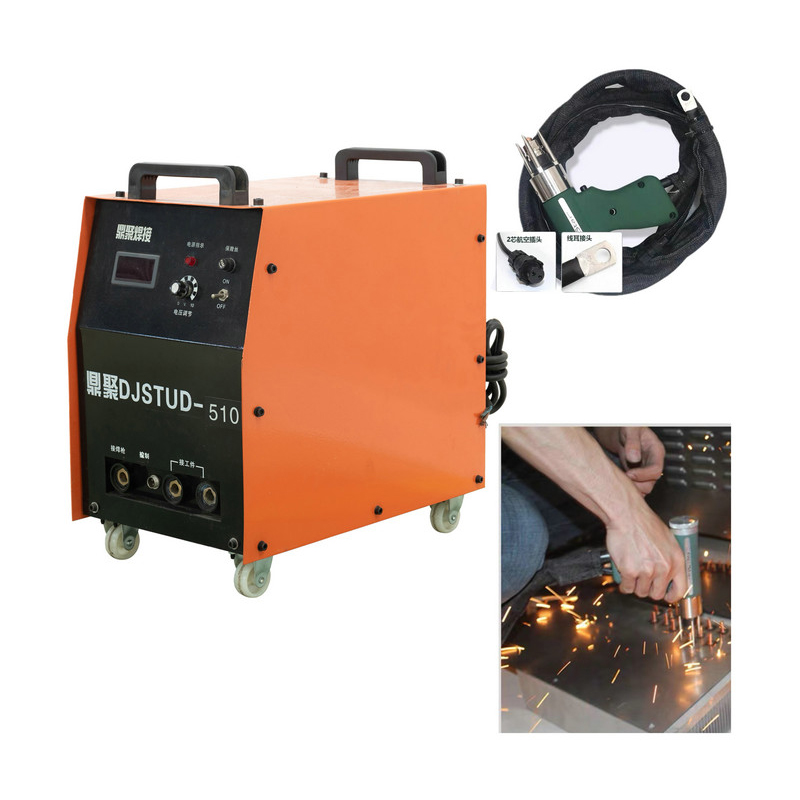
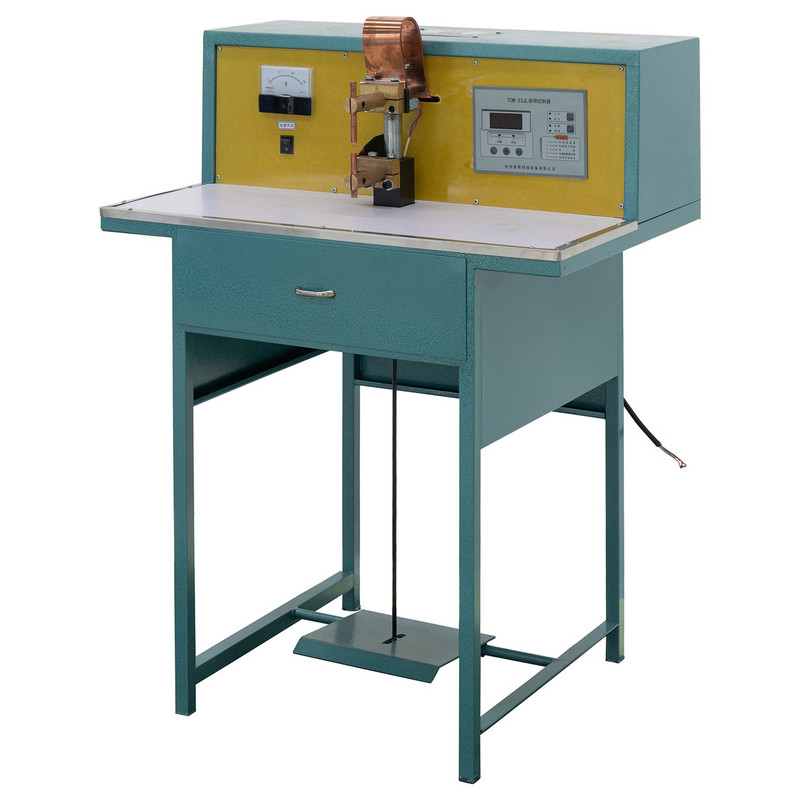
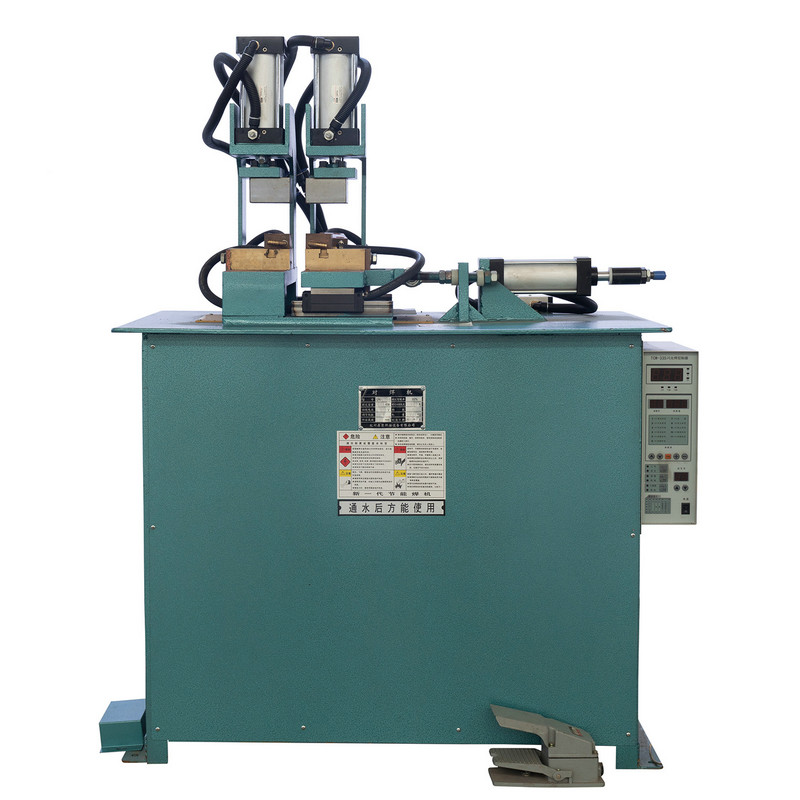
A bench-mounted or stationary stud spot welding machine is engineered for repetitive, high-precision fastening tasks where the workpiece is brought to the machine rather than the reverse. These systems typically integrate a fixed electrode arm, foot-pedal or pneumatic actuation, and digital timer control that locks in current, plunge depth, and dwell time once calibrated.
Facilities producing enclosures, cabinets, or panel assemblies benefit from this configuration because operators can process large batches without re-adjusting settings between parts. The rigid frame also reduces electrode drift, which keeps weld placement accurate to within a millimeter across thousands of consecutive cycles.
| Attribute | Typical Range | Production Benefit |
|---|---|---|
| Stud Diameter Capacity | 3mm to 10mm | Covers most panel fastener sizes |
| Duty Cycle | 60% to 80% | Sustains long continuous runs |
| Control Type | Digital timer or microprocessor | Repeatable weld quality |
| Typical Setting | Fixed workstation | Reduced setup time per batch |
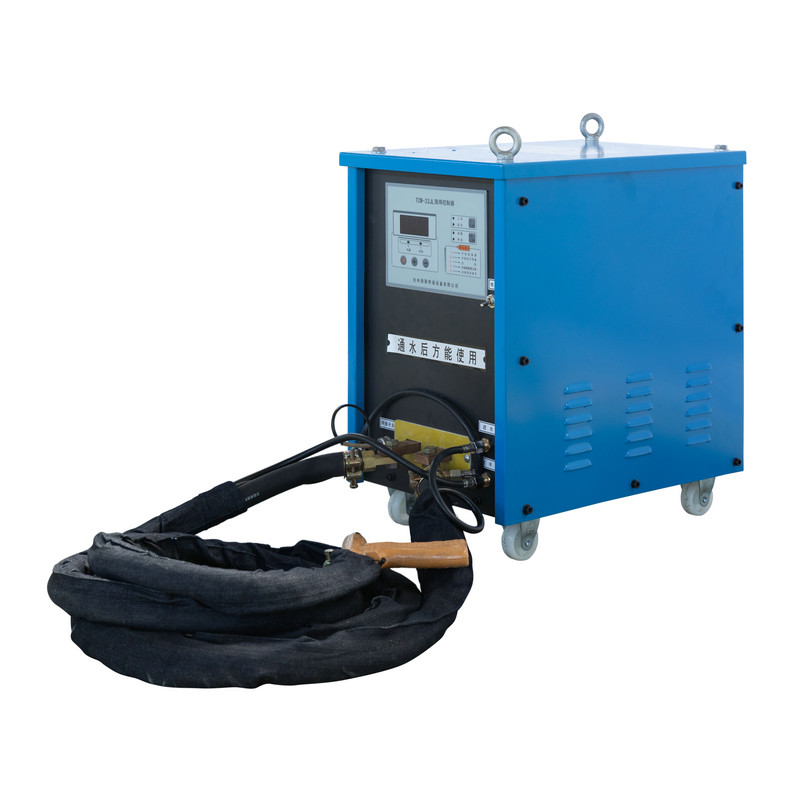
A dny mobile handheld spot welding machine serves a very different purpose from a bench system: it goes to the workpiece instead of the other way around. This makes it the practical choice for onsite repair, shipboard fabrication, elevator shaft installation, and any scenario where the base metal cannot be transported to a fixed station.
These units are typically built around a compact power supply, a lightweight gun, and a flexible cable set that allows the operator to reach awkward angles or elevated surfaces. Battery-assisted or inverter-based power sources have made handheld units considerably lighter than earlier transformer-based designs, improving operator comfort during extended shifts.
Trade-offs come mainly in duty cycle and maximum stud diameter, since portability requires smaller transformers or capacitor banks compared to stationary equipment. For thin gauge panels and small to medium fasteners, however, this trade-off rarely affects joint reliability.
The radar comparison below summarizes relative performance across six operational dimensions, scored on a scale where a larger area indicates stronger performance in that category.
Stationary machines lead in duty cycle, output power, and precision because their fixed transformers can sustain heavier current without overheating. Handheld units take the advantage in portability and setup ease, making them better suited to variable job sites rather than fixed batch production.
Manufacturing plants have steadily shifted toward semi-automated and fully automatic stud welding lines as labor costs rise and quality consistency becomes a competitive differentiator. The line chart below tracks approximate adoption share of automated stud welding equipment among mid-to-large metal fabrication facilities.
This upward trajectory reflects broader factory floor changes rather than a single technology shift. As sheet metal thicknesses have trended thinner in appliance and enclosure manufacturing, the reduced heat input of an automatic stud welding machine has become increasingly valuable for avoiding panel warping.
Adoption varies significantly by sector depending on panel thickness, fastener density, and cosmetic finish requirements. The bar chart below reflects relative usage intensity across common industrial categories.
Shipbuilding and automotive sectors lead in usage intensity due to high fastener counts across large curved and flat panel sections, where reverse-side marking is unacceptable. Furniture manufacturing shows lighter adoption, largely because lower fastener density and thicker stock reduce the process advantage over conventional joining methods.
Selecting between stationary and handheld equipment comes down to where the work happens and how many joints must be completed per shift. The table below summarizes common decision scenarios.
| Application Scenario | Recommended Category | Primary Reason |
|---|---|---|
| High-volume panel assembly line | Stationary automatic machine | Higher duty cycle and repeatability |
| Onsite repair or maintenance work | Handheld portable unit | Mobility and quick setup |
| Shipboard or elevated structure fastening | Handheld portable unit | Flexible cable reach |
| Enclosure or cabinet manufacturing | Stationary automatic machine | Consistent placement accuracy |
| Low-volume prototype fabrication | Handheld portable unit | Lower equipment footprint |
Facilities running mixed production, such as a plant producing both standard enclosures and custom field-service parts, often maintain both machine categories rather than relying on a single configuration.
Weld quality degrades gradually before it fails outright, and most issues trace back to a small set of preventable causes. The following habits reduce unplanned downtime across both equipment categories.
Stationary machines are fixed at a workstation and built for high-volume, repeatable production, while handheld units are portable and designed for onsite or low-volume fastening tasks where the workpiece cannot be moved.
Properly set stud spot welding produces minimal to no visible marking on the reverse surface because the heat-affected zone is extremely localized and the cycle duration is very short.
Replacement intervals depend on cycle volume and material type, but tips should be inspected whenever weld inconsistency appears, since worn tips are one of the most common causes of poor fusion.
Many machines support a range of diameters, but timer and current settings must be recalibrated for each size to maintain consistent penetration and avoid overheating.
Handheld units are generally optimized for thin to medium gauge material; thicker plate applications typically require the higher output capacity of a stationary machine.
Zalecane produkty

Produkt
Informacje kontaktowe.
+86-152-5712-5882
Fax: +86-563-2269966
Nr 21 Guangping Road, Guangde Economic Development Zone, Guangde City, prowincja Anhui
Kod QR